
Quick Answer
How to revive artificial grass after winter starts with diagnosing what actually happened to it: matted fibers from snow weight, shifted infill from moisture and freeze-thaw cycles, or trapped odor from months of reduced evaporation. Cross-brush matted fibers against the grain, top up low infill, and treat odor with an enzyme cleaner. If you also notice loose seams, exposed backing, or areas that feel spongy underfoot, that's damage, not just dirt, and it needs a repair assessment rather than routine cleaning.
A professional assessment tells you which one you're dealing with.
Matted fibers and low infill are fixable in an afternoon. Loose seams and exposed backing need repair, not cleaning. TurFresh identifies which before recommending a service.
✔ Pet Safe✔ Kid Safe✔ 150,000+ Services✔ 30-Day Guarantee
Key Takeaways
🌨️ Winter damage to turf is almost always mechanical, not chemical. Snow weight flattens fibers, freeze-thaw cycles shift infill, and trapped moisture concentrates odor. None of that is permanent on its own.
🖐️ Cross-brushing against the grain is the single most effective fix for matting. One thorough session in multiple directions restores upright fiber position in most cases without any other intervention.
⚠️ Not every post-winter problem is a cleaning problem. Loose seams, visible wrinkles, or exposed backing are signs of damage that need a repair assessment, not brushing or rinsing.
🧊 Snow itself rarely damages turf. Snow removal method does. Metal shovels and sharp tools cut fibers and loosen seams. Let snow melt naturally or use a plastic shovel.
🔁 This is diagnosis and repair-readiness, not the full cleaning routine. For the complete step-by-step spring cleaning process, see our artificial turf spring cleaning guide.
Why Does Artificial Grass Look Flat or Tired After Winter?
Artificial grass looks matted or dull after winter because snow weight, foot traffic, moisture, and debris compress the fibers and shift infill. While synthetic turf is designed to withstand harsh weather, winter conditions can temporarily affect its appearance and performance.
Snow accumulation presses fibers down. Ice and heavy rain redistribute infill. Leaves and organic debris sit longer during colder months, contributing to odor or bacteria buildup. Knowing how to revive artificial grass after winter comes down to telling these reversible, surface-level issues apart from actual structural damage underneath.
How Do You Fix Matted Artificial Grass After Winter?
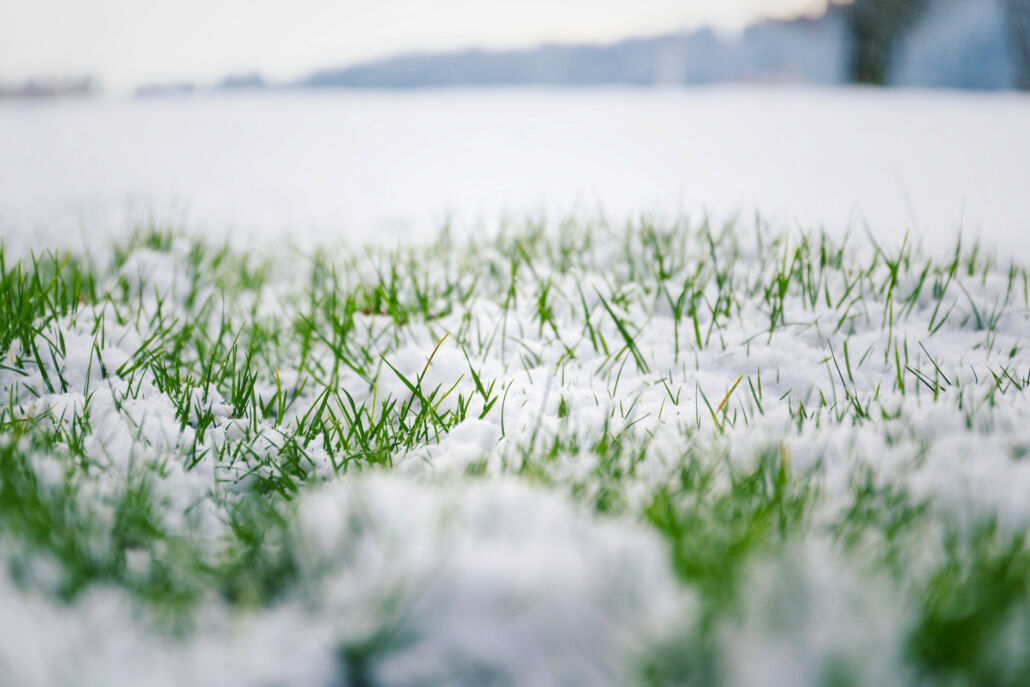
You fix matted artificial grass by cross-brushing the fibers against the grain to restore their upright position. During winter, turf blades naturally flatten in one direction. Using a soft-bristled brush or a rake with synthetic tines, gently brush the grass opposite its natural lay. This lifts and separates fibers, restoring a fuller, more natural look.
Cross-brushing also improves airflow between blades, which supports drainage and helps prevent long-term compression.
💡 Pro Tip
Brush in multiple directions rather than just one pass. This lifts fibers more evenly and prevents future matting from resettling in the same pattern.
Can Snow Damage Artificial Turf?
Snow does not typically damage artificial turf, but improper removal methods can. Avoid using metal shovels or sharp tools that may cut fibers or loosen seams. Instead, allow snow to melt naturally when possible, or use a plastic shovel to gently remove excess buildup.
📌 Artificial turf systems are built with drainage layers that allow melting snow to pass through without harming the base underneath.
What Are the Signs Your Artificial Grass Needs Repair, Not Just Cleaning?
Artificial grass needs repair, not cleaning, if you notice loose seams, visible wrinkles, uneven sections, or exposed backing material. These are structural signs, distinct from the surface matting and odor that respond to a normal cleaning routine.
Minor issues can often be corrected early through seam tucking or infill adjustment. Addressing these concerns quickly prevents more extensive repair later.
📌 If damage appears structural or widespread rather than isolated to one small area, a professional assessment can confirm whether it's a repair job or something a deep clean will resolve on its own.
How Important Is Infill for Synthetic Grass After Winter?
Infill is essential because it supports turf fibers, provides cushioning underfoot, and maintains proper drainage. Heavy winds, melting snow, and foot traffic over winter can cause infill levels to shift or deplete. Low infill makes turf feel harder underfoot and can accelerate fiber wear.
Inspect your lawn for areas that feel uneven or appear slightly sunken. Add compatible infill material to low spots and rake evenly to distribute it.
Leaving infill uneven can:
✔ Reduce comfort
✔ Affect drainage performance
✔ Increase long-term fiber deterioration
✔ Lead to premature repair needs
💡 Pro Tip
Check infill levels at least once per season, especially after heavy weather cycles.
How Do You Eliminate Odors That Show Up After Winter?
You eliminate post-winter odor by rinsing debris and applying a turf-safe enzymatic deodorizer that targets bacteria at the source, not by masking it with fragrance. Winter conditions trap pet waste residue, leaves, and moisture in the turf system, and odors often become noticeable once temperatures rise in spring.
Rinse the lawn thoroughly with water to flush surface debris, then apply an enzyme-based cleaner like TurFresh BioS+ and allow it to dwell for 10 to 15 minutes. Enzymatic formulas break down odor-causing bacteria at the molecular level rather than covering the smell.
💡 Pro Tip
Focus on high-use pet areas and shaded zones where moisture lingers longer than the rest of the lawn.
When Does This Go Beyond DIY and Need a Professional Deep Clean?
Professional service is worth calling in when your turf sees heavy pet use, drainage seems slow, fibers stay flat even after brushing, or odor persists after enzyme treatment. These are signs the issue has moved past what surface-level DIY care can reach.
TurFresh's 10-point cleaning process combines power brooming, infill redistribution, minor seam repair, edge tucking, full surface sanitization, and enzymatic treatment in a single visit. For the complete step-by-step spring cleaning routine, including the full sequence for DIY or professional service, see our artificial turf spring cleaning guide.
That's the signal DIY has reached its limit.
Professional power brooming and infill decompaction reach what a home brush cannot. TurFresh's 10-point process restores turf before peak spring and summer use.
✔ Pet Safe✔ Kid Safe✔ 150,000+ Services✔ 30-Day Guarantee
Frequently Asked Questions
How do you revive artificial grass after winter?
Brush fibers against the grain to fix matting, top up low infill, rinse and apply an enzyme deodorizer for odor, and check seams and edges for damage. If fibers stay flat after brushing or you notice loose seams, that points to repair rather than routine cleaning.
How long does it take to clean artificial turf after winter?
Basic brushing and rinsing takes one to two hours for an average yard. Professional deep cleaning typically takes longer depending on size and condition, but covers infill decompaction and seam inspection that DIY methods cannot.
How often do you need to add infill to artificial grass?
Inspect infill levels seasonally and top up as needed, especially after heavy rain, wind, or a full winter season. Areas that feel sunken or firmer than the rest of the lawn are the clearest sign infill has shifted or depleted.
Can artificial grass grow mold after winter?
Mold is uncommon in properly installed turf with working drainage, but organic debris left sitting through winter can contribute to odor or bacteria buildup if not cleaned. Persistent dark discoloration in shaded, poorly drained areas is worth a closer look.
How do I know if my turf needs repair instead of just cleaning?
Loose seams, visible wrinkles, uneven sections, or exposed backing material are structural signs, not cleaning problems. Matting and odor respond to brushing and enzyme treatment. Seam and backing issues need a repair assessment.
Does reviving turf after winter require professional help?
Not always. Matting and light infill loss are DIY-manageable with brushing and topping up infill. Professional service is worth it when odor persists after treatment, fibers stay flat after brushing, or you suspect structural damage like seam separation.
Share

John Pla is the owner of TurFresh and an expert with over 20 years of experience in artificial turf cleaning and maintenance. John’s passion for sustainability, community impact, and innovative solutions has made him a trusted figure in the artificial grass industry and beyond.