Brushing Artificial Grass the Right Way (Plus Mistakes to Avoid)
May 12, 2020 · 11 min read · By John Pla, Founder of TurFresh
Quick Answer: The safest way to brush artificial turf is to remove debris first, rinse with a garden hose, and brush the blades upright using plastic or synthetic bristles. Avoid metal rakes, high-pressure washing with hot water, bleach, and ammonia-based cleaners, these shorten turf life, damage fibers, and for pet households, create toxic fumes. If the problem is odor rather than appearance, rinsing alone will not solve it: enzyme-based cleaner with full dwell time is required to reach the infill where bacteria actually live.
You might be making one of these mistakes.
TurFresh cleans down to the infill and backing where the real buildup lives. Safe for pets and kids the same day.
Schedule Your Turf Cleaning✔ Pet Safe✔ Eco Friendly✔ 20+ Years of Experience✔ 30-Day Guarantee
Key Takeaways
🔑 Metal rakes are the most common tool mistake. They snag synthetic fibers, loosen seams, and cause permanent wear in high-traffic areas. Always use plastic or synthetic-bristle tools specifically designed for artificial grass.
🔑 Pressure washing is safe only with cold water, a wide-angle nozzle held at least 12 inches from the surface, and the lowest pressure setting. Hot water or direct spraying at seams causes fiber damage and displaces infill in a way that cannot be reversed with more cleaning.
🔑 Garden hose rinsing handles surface dirt but not odor. If the problem is smell, rinsing alone does not reach the infill layer where bacteria live. Enzyme-based cleaner with full dwell time is required, applying and immediately rinsing defeats the purpose.
🔑 Always brush against the grain, not with it. Brushing with the natural lean of the fibers presses them further down. Brushing against it is what lifts them. This single technique change produces a noticeable difference in how turf looks and performs.
🔑 Bleach and ammonia-based cleaners degrade turf backing and create toxic fumes when they contact pet urine residue. Use only products labeled safe for synthetic turf. When in doubt, water and enzyme cleaner cover virtually all routine cleaning needs safely.
How to clean artificial turf: the basics that protect your investment
The biggest mistake is treating artificial turf like concrete or natural grass. Synthetic turf requires gentler tools and methods to protect the fibers, backing, and infill system. The wrong approach does not just leave the turf dirty, it shortens its life.
Why should you avoid metal rakes on artificial turf?
Metal rakes can damage synthetic grass fibers and shorten the life of your turf.
Plastic or synthetic bristles lift debris and fluff blades without tearing or weakening the turf yarn. Metal prongs can snag fibers, loosen seams, and cause permanent wear, especially in high-traffic areas.
What to do instead:
👉 Use a plastic rake or turf-specific grooming tool 👉 Brush against the grain to lift flattened blades 👉 Focus on walkways, pet areas, and seating zonesUsing tools designed specifically for artificial grass helps maintain blade structure and surface consistency.
Can you pressure wash or jet wash artificial grass?
Yes, but only if done carefully and correctly.
Pressure washing and jet washing carry the same risks. The issue is not the tool, it is the pressure, heat, and angle used. High force aimed directly at the turf surface can disturb infill, damage seams, and push debris deeper into the base layer rather than lifting it out.
Safe power washing tips:
✔ Never use hot water ✔ Avoid direct spraying at seams and edges ✔ Use a wide-angle nozzle and keep it at least 12 inches from the surface ✔ Start with the lowest pressure setting ✔ Stop immediately if you see infill or sand collecting at the edgesIf infill is removed during cleaning, it should be replaced using coated turf infill products designed for artificial turf. Basic silica sand should not be used as a replacement.
Is a garden hose enough to clean artificial turf?
For light dirt, dust, and pollen, a garden hose rinse is usually enough.
Regular rinsing prevents fine debris from settling into the infill and helps maintain drainage and appearance. Many turf surfaces only need a hose rinse and brushing to look refreshed.
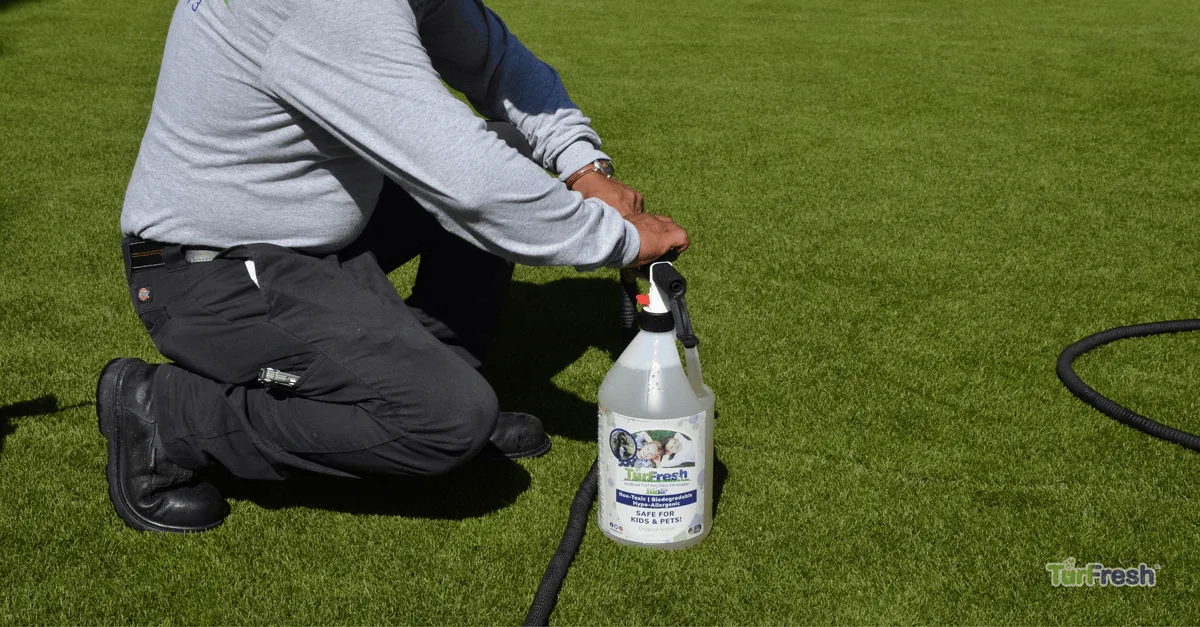
If the problem is odor, rinsing alone will not solve it. That requires an enzyme-based cleaner that reaches the infill layer where bacteria actually live. Applying the cleaner and immediately rinsing removes it before it can do anything, the dwell time is the step that makes the difference.
Why is brushing artificial turf important?
Brushing keeps turf blades upright and prevents matting.
Over time, foot traffic, pets, and furniture compress turf fibers. Without brushing, turf can look worn even when it is clean. If you have dogs using the yard daily, brushing high-traffic areas after rinsing makes a noticeable difference fast.
How do you fluff up artificial grass?
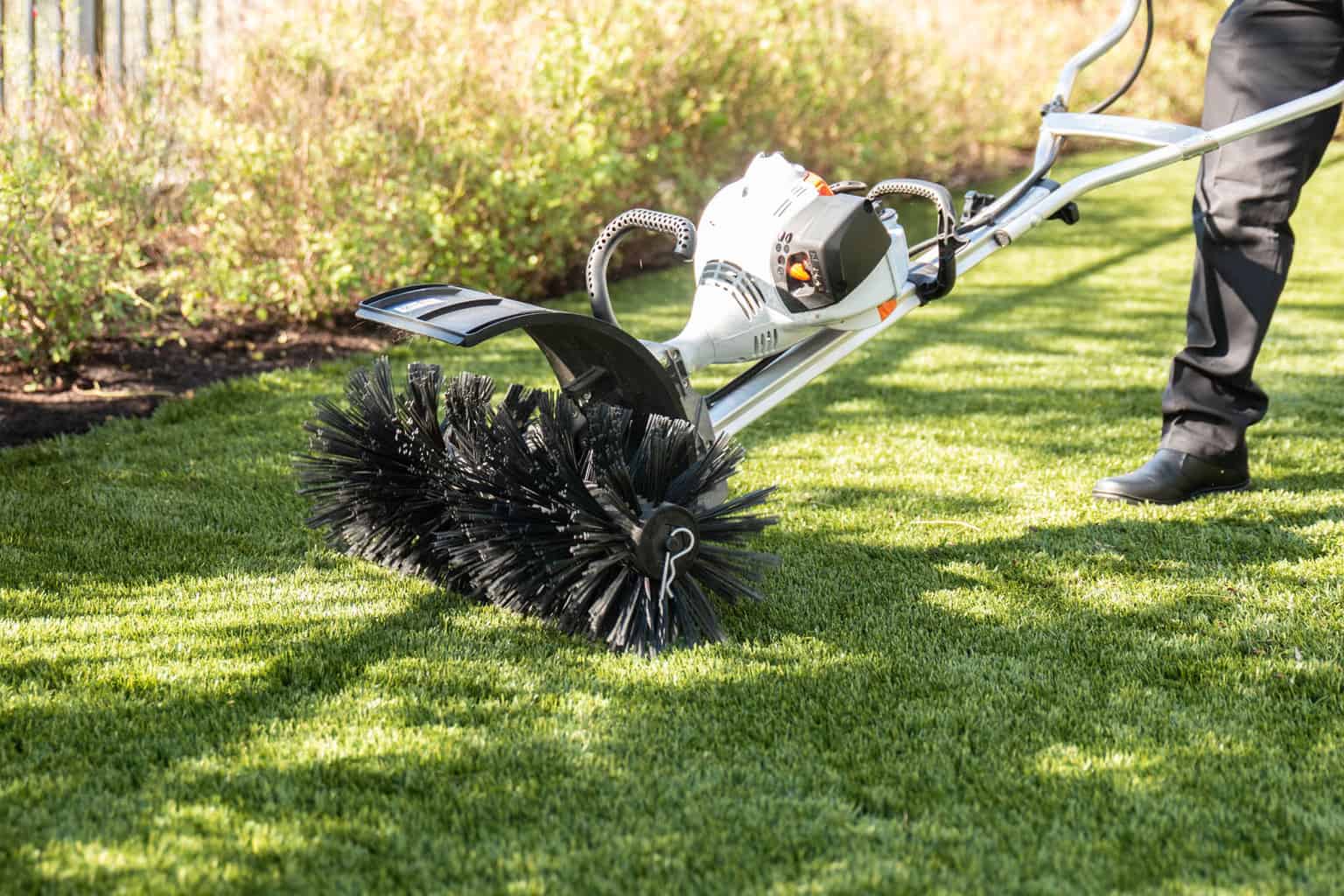
Artificial grass is fluffed by brushing against the grain using soft bristles or a turf groomer.
Brushing lifts flattened blades, redistributes infill, and restores a natural look. The direction matters: identify the natural lean of the fibers by looking across the surface at an angle, then brush in the opposite direction.
Best times to brush turf:
• After rinsing or rain • In high-traffic areas and pet zones • When blades start to lay flat
What does an artificial turf groomer do?
An artificial turf groomer lifts blades and evens out the surface more effectively than manual brushing.
Groomers are especially helpful for large lawns, pet areas, and turf that experiences frequent foot traffic. TurFresh's TurfBloom service uses powered grooming equipment that reaches fiber depth and redistributes infill more thoroughly than any hand tool.
What happens if you do not clean artificial turf at all?
Neglecting turf maintenance leads to dull appearance, odor buildup, compacted infill, and flattened blades.
While artificial grass does not grow, it still collects dirt, debris, organic material, and pet waste residue. Over time, this buildup affects both appearance and performance. For households with dogs, skipping cleaning for a few weeks is enough for odor to become noticeable. Compacted infill slows drainage and makes the surface harder underfoot, both signs that professional service is needed, not just more rinsing.
How do you clean artificial turf that gets muddy?
Muddy turf should be cleaned gently to avoid pushing debris deeper into the infill.
Steps for cleaning muddy artificial grass:
👉 1. Allow mud to dry if possible, wet mud spreads when moved, dry mud lifts cleanly 👉 2. Remove solid debris first with a plastic rake or leaf blower 👉 3. Rinse lightly with water from one end to the other 👉 4. Brush after drying to lift blades back to uprightAvoid aggressive spraying that forces mud into the turf base. Work in the direction of the drainage system, not across seams.
Are harsh household cleaners safe for artificial turf?
Many household cleaners are too harsh for artificial turf and can damage fibers or leave residue.
Strong chemicals can break down turf backing, attract more dirt, or interfere with drainage. Bleach reacts with ammonia in pet urine and creates toxic fumes. Vinegar can help with light odors but does not eliminate the bacteria already established in the infill. Neither is a substitute for an enzyme-based cleaner designed for synthetic turf.
Safer approach:
✔ Start with water ✔ Avoid bleach, ammonia-based cleaners, and harsh degreasers ✔ Use turf-safe enzyme-based products for odor and bacteria ✔ Check product labels, "pet-safe" is a safety claim, not a performance claim; look for "formulated for synthetic turf"
Practical tips for keeping artificial turf clean
✅ Rinse lightly on a regular basis ✅ Remove debris before it breaks down into organic material in the infill ✅ Brush high-traffic and pet areas often, always against the grain ✅ Address spills and pet waste quickly, every hour of delay increases bacterial load ✅ Avoid heat, metal tools, and harsh chemicals
Small, consistent care prevents larger problems later. The most expensive maintenance is reactive maintenance, cleaning after infill has become saturated or fibers have developed permanent compression.
When should you use a professional artificial turf cleaning service?
Professional turf cleaning is the right move when:
• Odors return within a day or two of cleaning regardless of what you use • Turf stays matted despite brushing • Infill has shifted or compacted in high-use zones • The surface looks dull after regular rinsing • You have multiple dogs with heavy daily use • The turf has not had a professional service in over 12 monthsProfessional artificial turf cleaning services use controlled methods that clean, deodorize, brush, and restore turf without damaging it, and they reach the infill layer where no surface cleaning method goes.
The buildup is in the infill, not on the surface.
TurFresh reaches the infill and backing layer where pet urine and bacteria actually accumulate. Most yards are back to fresh within one service.
Schedule Your Turf Cleaning✔ Pet Safe✔ Eco Friendly✔ 20+ Years of Experience✔ 30-Day Guarantee
Complete Guide
📖 5 Maintenance Tips to Extend the Life of Your Artificial Turf, the complete care schedule: debris, brushing, pet waste, infill, and professional cleaning frequency.
Frequently Asked Questions
How often should artificial turf be cleaned?
Light rinsing and debris removal should be done as needed, typically weekly. Brushing should be done regularly in high-traffic areas, especially after rain or heavy use. For homes with dogs, enzyme treatment of pet zones once a month prevents odor from building up. Professional deep cleaning every 3 to 6 months is recommended for pet households.Do you need to clean artificial grass even if it looks fine?
Yes. Dust and fine debris build up over time even if turf appears clean. Pet urine residue also accumulates in the infill before any visible sign or smell appears. By the time odor is noticeable, the infill has already been building up for weeks.What do you clean artificial grass with?
Most cleaning can be done with water, a plastic rake or blower, and synthetic-bristle brushing. For odor and bacteria from pet waste, use a turf-safe enzyme-based cleaner with full dwell time. Avoid bleach, vinegar in large quantities, ammonia-based cleaners, and any product not labeled safe for synthetic turf.Can pressure washing damage artificial turf?
Yes, if done incorrectly. High pressure, hot water, and direct spraying can damage fibers and displace infill. If you pressure wash, use cold water, a wide-angle nozzle held at least 12 inches from the surface, low pressure, and never aim directly at seams or edges.How long does artificial turf last with proper cleaning?
With proper care and gentle cleaning, artificial turf typically lasts 15 to 20 years. Using metal tools, harsh chemicals, or high-pressure hot water accelerates fiber degradation and can cut years off the installation life.Why does turf still smell after cleaning?
The odor source is in the infill layer, not on the surface. Rinsing and surface cleaning do not penetrate the 3 to 4 inches of infill depth where uric acid crystals and bacteria accumulate. Enzyme-based cleaner applied with full dwell time addresses the infill layer. If odor returns within 48 hours of correct enzyme treatment, the infill is saturated and needs professional extraction.Is it bad to vacuum artificial turf?
Standard household vacuums can remove infill along with debris, which disrupts the infill distribution that keeps fibers upright and the surface functional. A leaf blower on a low setting or a plastic rake is safer for routine debris removal.