Pet Odor Removal: How to Clean Artificial Grass
Dec 26, 2019 · 11 min read · By John Pla, Founder of TurFresh
How to clean pet turf, remove dog pee smell, and keep your yard fresh
You installed artificial turf, you loved how it looked, then your pet started using it as their personal restroom. You clean up, but a stench forms over time. It can be embarrassing, and it can make the whole yard feel off.TL;DR
If your artificial turf smells like dog pee, the odor is usually trapped below the surface in pet hair, debris, and bacteria buildup that slows drainage. The fix is simple and repeatable: remove debris, rinse with enough water to flush the system, brush to restore drainage, then use a turf-safe pet turf cleaner (preferably enzyme-based) to neutralize odor at the source. Deep cleaning a few times per year keeps the smell from returning.
Quick Answer:
Artificial turf odor is best removed by clearing debris and pet hair, flushing the turf thoroughly, brushing to improve drainage, and applying a turf cleaner that breaks down and neutralizes bacteria and urine residue instead of masking the smell.
What will this guide help you do?
The sections below are designed so you can jump to the exact answer you need.👉 Who needs a pet turf cleaner?
👉 Why does dog urine smell worse on artificial grass?
👉 How do you maintain artificial turf to prevent odor?
👉 How do turf cleaners work?
👉 How do you remove pet odor from artificial turf?
👉 When should you hire a professional turf cleaning service?
👉 How can TurFresh help?
Who needs a pet turf cleaner?

If you have artificial turf, you need to take care of the investment. Artificial turf is low maintenance, but it is not care-free.
➧ The first sentence that matters: Anyone with artificial turf, especially with pets or kids, benefits from a pet turf cleaner and a maintenance routine.
If turf is not maintained, it can fall victim to debris and bacteria buildup. When buildup occurs, turf cannot properly drain. Bacteria can grow, and that can create unpleasant odors and hygiene concerns for families.
If you have artificial turf plus pets or kids, it becomes even more important to keep the surface clean. With kids or pets, there is typically more buildup and debris such as hair and urine bacteria. Your pet will use the turf as their personal restroom, and if left untreated, urine can settle and begin to smell.
If you want to entertain or have your kids, furry and human, play in your yard, the goal is the same: a clean yard that drains properly and smells fresh.
➧ Bottom line: Consistent cleaning and maintenance is the best way to protect your turf and prevent odor.
💡 Tip you can highlight: If water pools, drains slowly, or the turf feels matted, odor is more likely to return. That usually means debris and pet hair are blocking drainage.
Why does my dog’s pee stink on artificial turf?
Dog urine will make artificial turf stink when urine residue and bacteria build up faster than the turf can flush it away.Artificial turf is designed to drain liquids and flush out urine, but it often takes more water than people expect to rinse the system thoroughly. Odor is also more likely when turf is not draining correctly due to buildup like dog hair or debris such as shrubbery and rocks.
When the turf is not draining properly and your pet urinates day after day, smell and bacteria can cling to the turf and grow.
Two foundational steps matter most for pet odor removal:
1. Clear out debris.2. Restore proper drainage.
These are commonly the first steps a turf cleaning service tackles because drainage issues make odor harder to eliminate.
💡 Practical takeaway: If odor keeps returning, the issue is often below the surface. Surface-only rinsing rarely solves it for long.
How do you maintain artificial turf so it stays clean and fresh?

The best way to prevent pet odor is to stay ahead of buildup with simple, consistent maintenance.
What are the top artificial turf maintenance tips?
Below are practical maintenance actions that protect turf, help drainage, and reduce odor.1) How do you clean stains on artificial turf?
Clean stains promptly. Spills happen, especially with kids and pets. If you spill soda, alcohol, coffee, oils, or tea, blot up the liquid with a towel. Rinse the area with a solution of water and a mild household detergent, then rinse thoroughly with cool water.2) How do you clean up pet waste on artificial turf?
Pick up pet waste. For solid waste, allow it to dry before removing it. Then use your preferred method, such as a plastic bag or pooper scooper, and throw it out. After removal, spray the area with BioTurf BioS+ turf cleaning products to help remove bacteria quickly.3) How do you remove debris and pet hair from turf?
Clear debris. Remove shrubbery, rocks, and especially pet hair. Debris can build up quickly. Use a push broom and brush the turf. Pet hair is one of the biggest causes of hindered drainage.4) How often should you rinse artificial turf?
Rinse your turf regularly. Rinsing helps clear debris between the blades. Brush off debris with a push broom, then rinse the area with water.5) How do you handle weeds on artificial turf?
Remove weeds. If weeds begin to grow underneath your turf, pull them out. You can spray a weed killer on artificial turf, but keep your pet off the treated area for at least a day.6) How do you straighten flattened turf blades?
Straighten the blades. Heavy use from kids or pets can push blades down. Brush in the opposite direction with a push broom to help return blades to an upright position.📌 Note: Even with strong DIY maintenance, deep cleaning is still helpful a few times a year because the steps above do not always treat bacteria growing beneath the surface due to debris buildup and pet waste.
💡 Tip you can highlight: If you have multiple dogs or a dedicated potty zone, focus most of your maintenance on that area. Odor typically concentrates where pets go most often.
How do turf cleaners work?
A turf cleaner works by targeting odor and bacteria that simple rinsing does not fully remove.If you follow the maintenance tips above, a turf cleaner service can handle deeper cleaning that improves drainage and tackles odor below the surface.
TurFresh cannot speak for other products, but TurFresh turf cleaner products work by:
👍 Immediately eliminating odor with a pleasant, non-toxic fragrance👍 Using enzyme technology to break down and neutralize bacteria and remove bio-hazard contaminants that linger on your turf’s surface
What happens during a professional artificial turf deep cleaning?
When TurFresh deep cleans artificial turf, the service can include:
✔ Reblooming the turf so it looks natural again✔ Improving drainage by de-compacting the infill and removing pet hair
✔ Minor repairs such as tucking the edges, re-attaching seams, and similar fixes
✔ Magnet sweep to remove dangerous metal if needed, mostly for athletic fields
✔ Weed removal
✔ Adding TurFill Granulare infill to help prevent new odors (TurFill is designed to absorb urine and help prevent ammonia from forming an odorous gas)
✔ Applying TurFresh or BioTurf turf cleaner to clean and deodorize bacteria in the yard
✅ The expected result: Turf cleaners like these should keep turf smelling fresh for months.
How often should artificial turf be deep cleaned?
For many households, quarterly or biannual deep cleaning is enough, depending on the number of pets and how heavily the turf is used.💡 Tip you can highlight: If odor returns quickly after rinsing, the turf often needs deeper hair removal and infill attention, not just more deodorizer.
How do you remove pet odor from artificial turf?

The best way to remove pet odor is to combine regular maintenance with a turf cleaner that treats the bacteria and urine residue causing the smell.
Staying on top of basic turf maintenance plus periodic deep cleaning is the most reliable approach for long-term odor control.
Why do many DIY pet odor solutions fail on artificial turf?
DIY options can be frustrating for a few common reasons:
➡️ Many products do not last long, often because they are too diluted or only treat limited sources of odor➡️ Some homemade solutions, such as white vinegar, do not treat the underlying issue, especially bacteria and ammonia created from pet waste
➡️ A turf cleaner service can address these deeper issues by using the right products for ammonia and bacteria while also removing the debris that prevents proper drainage.
💡 Practical tip you can highlight: If you want DIY odor control to work better, focus on drainage first. Remove pet hair, brush the turf, then rinse thoroughly before applying any turf cleaning spray or pet turf cleaner.
What is the difference between a pet turf cleaner, a turf cleaning spray, and an artificial turf deodorizer?
They often overlap, but the intent is different.➡️ Pet turf cleaner: Typically used to clean turf in pet areas and reduce odor by treating residue and bacteria.
➡️ Turf cleaning spray: Often used for quick applications between deeper cleanings, especially in high-use zones.
➡️ Artificial turf deodorizer: Usually refers to odor-focused treatment, ideally one that neutralizes odor instead of masking it.
For best results, look for turf-safe products designed for artificial grass and pet areas, and pair them with brushing and proper rinsing.
How do you disinfect artificial turf safely?
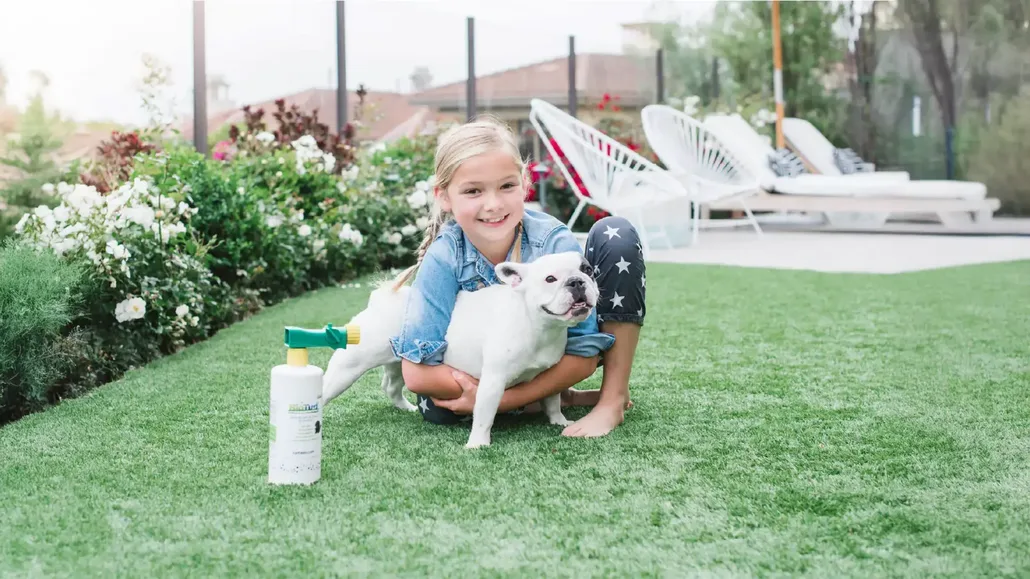
Disinfecting artificial turf starts with removing waste and restoring drainage so disinfecting products can reach the areas that matter.
A simple approach:
👍 Remove solid waste and visible debris.👍 Rinse thoroughly.
👍 Apply a turf-safe disinfecting product designed for artificial grass.
👍 Allow it to sit based on product directions.
👍 Rinse again and brush the turf.
👍 Disinfecting is most effective when pet hair and debris are not blocking drainage.
When should you hire a professional turf cleaning service?
Hiring a professional is a strong option when odor keeps returning or drainage is compromised.Professional help is often worth it when:
⚠️ Odor returns quickly after rinsing⚠️ Turf drains slowly or feels matted
⚠️ You have multiple pets or heavy turf use
⚠️ You want deeper hair removal, infill care, and a long-lasting reset
These deeper steps are frequently what make odor control last for months instead of days.
How can TurFresh help with pet odor removal?
TurFresh has worked in the artificial grass care and cleaning industry for over 10 years and focuses on helping homeowners restore a clean, fresh-smelling turf system.TurFresh offers artificial turf cleaning plans designed to keep turf smelling fresh year-round. TurFresh TurfTech maintenance professionals are specially trained to use proven processes to eliminate bacteria and odor.
What TurfCare plans are available?
TurFresh offers four TurfCare plan options:
👉 Bi-Annual (10% off each service)👉 Quarterly (25% off each service)
👉 Bi-Monthly (35% off each service)
👉 Monthly (50% off each service)
With each TurfCare plan, TurFresh goes through a 10-point service to help ensure the turf is maintained and cared for.
💡 Callout you can highlight: Want it handled for you? TurFresh offers cleaning plans that help keep turf smelling fresh year-round. Make it easy and let the TurFresh team clean your turf.
Frequently Asked Questions
How do you clean turf from dog pee?
• Rinse the area thoroughly, brush to remove pet hair and improve drainage, then apply a turf-safe pet turf cleaner that targets urine residue and bacteria.Why does artificial turf smell like dog urine even after I rinse it?
• Rinsing may not flush the full turf system, especially if pet hair, debris, or compacted infill slows drainage and traps residue below the surface.What is the best way to remove pet odor from artificial grass?
• The most reliable approach is consistent maintenance plus periodic deep cleaning, including debris removal, drainage improvement, and odor treatment that targets bacteria.How often should you clean artificial turf if you have dogs?
• Most pet areas benefit from regular rinsing and brushing, plus deeper cleaning a few times per year. Households with multiple dogs often need more frequent deep cleaning.Do enzyme turf cleaners work for pet odor?
• Enzyme-based turf cleaners are designed to break down and neutralize bacteria and contaminants that can cause odors on turf surfaces.Can vinegar remove dog pee smell from artificial turf?
• Vinegar may reduce odor temporarily, but it often does not address the underlying bacteria and ammonia issues that can form from pet waste, especially when drainage is compromised.How do you disinfect artificial grass for pets and kids?
• Remove waste and debris, rinse thoroughly, apply a turf-safe disinfecting product designed for artificial turf, allow dwell time based on directions, then rinse and brush.How long does a professional turf cleaning help control odor?
• A professional deep cleaning can help turf smell fresh for months, depending on pet count, turf use, and how well routine maintenance is followed.
💡 Practical tips you can pull out as highlights
✅ Tip 1: If pet hair is visible on the turf, drainage is usually already affected. Brush first, then rinse. ✅ Tip 2: Odor is easiest to control when you treat the potty zone more often than the rest of the yard. ✅ Tip 3: If turf smells worse in hot weather, increase rinsing frequency and focus on drainage and bacteria control. ✅ Tip 4: Deep cleaning works best when it includes infill de-compaction and pet hair removal, not just surface spraying.Related reading
- Artificial Turf Deodorizer: How to Remove Pet Odor for Good
- How to Clean Dog Run Turf: The Routine That Actually Controls Odor
- Turf Cleaning in Florida: Why High Humidity Makes Pet Odor Build Up Faster
Ready for an Odor-Free Yard? 📞 Call (855) 444-8873 or 📱 text (714) 709-2551 to get started. Professional Artificial Grass Cleaning Turf Cleaning Products | Deep Clean Your Turf and Infill Give your family and pets the clean, fresh outdoor space they deserve. 👉 New customers receive 10% OFF