
TL;DR
Pet waste is easy to manage on artificial grass when you follow a simple routine. Pick up solid waste daily, rinse urine spots with water, and use an enzyme-based turf cleaner when odors start to linger. If you have multiple pets or heavy use (dog runs, daycares), schedule a professional deep clean to remove trapped hair, compacted infill, and odor sources below the surface.
Quick Answer
Cleaning synthetic turf from pet waste means removing solids every day, rinsing urine areas with water, and using an enzyme turf cleaning spray to break down odor-causing residue when smells persist. Enzyme-based cleaners are commonly recommended because they target the source of ammonia odors instead of covering them up.
How do you clean synthetic turf from pet waste without making odors worse?
Remove solid waste daily and rinse the spot with a garden hose to flush residue before bacteria and odor build up. This is the fastest way to keep pet areas from becoming “hot spots” that smell stronger over time.
✔ Pick up solid waste every day
Use a pooper scooper or a bag, just like you would on natural grass, and remove any visible residue right away.
✔ Rinse the area after pickup
Hose down the exact spot to dilute and wash away what you cannot see.
💡 Tip
If your dog uses the same area each day, rinse that “favorite spot” more often than the rest of the yard.
What is the simplest artificial grass pet waste cleanup routine to follow?
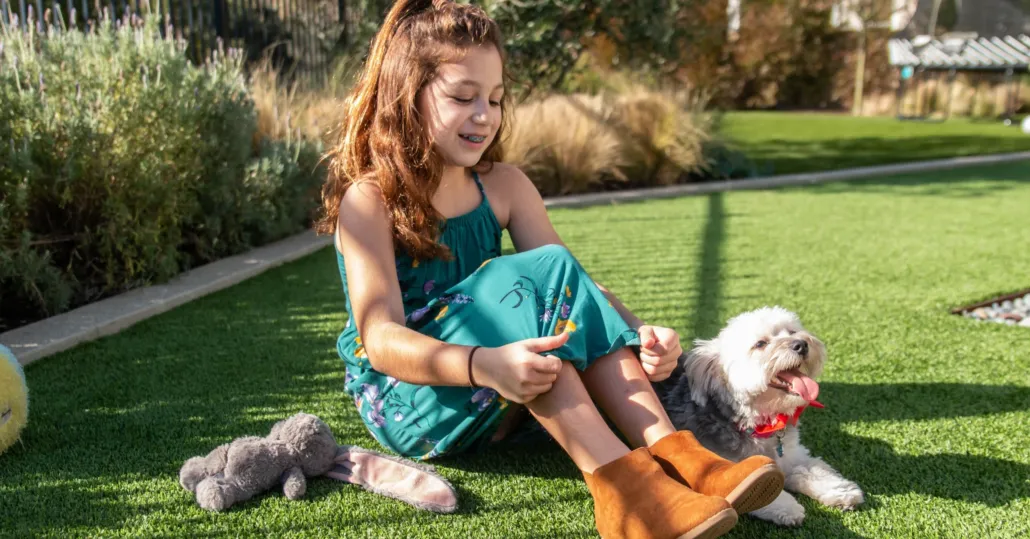
A quick daily cleanup plus a weekly rinse keeps most pet turf clean without extra products.
• Daily routine
• Pick up solid waste.
• Rinse the spot with water.
• Weekly routine
Hose down the turf to rinse away dust, debris, and leftover pet residue.
Give high-use pet zones extra attention with a longer rinse.
💡 Tip
If the turf feels tacky or smells stronger after heat, increase rinse frequency in the pet’s main bathroom area.
How do you handle DIY turf cleaning when urine odor or staining shows up?
Use a mild cleaner or a diluted vinegar solution for light odor, then rinse well to prevent residue from staying in the turf.
➡️ Option 1: Mild soap and water
Mix water with a small amount of mild detergent, apply to the affected area, then rinse thoroughly.
➡️ Option 2: White vinegar and water for mild urine smell
Mix white vinegar and water in a 1:1 ratio, apply to the urine spot, let it sit briefly, then rinse with a hose.
💡 Tip
Skip harsh chemicals. Products like bleach or ammonia can be unsafe around pets and may damage materials over time. If you want a stronger odor solution, enzyme cleaners are usually the next step.
What is a turf cleaning spray and when should you use it?
A turf cleaning spray is a ready-to-use product that helps neutralize pet odors and bacteria, and it is most useful when water rinsing is not enough.
How enzyme turf cleaners work
Enzyme-based cleaners are commonly used for pet turf because they break down odor sources linked to urine and waste, including ammonia-related smells.
How to use an enzymatic turf cleaning spray
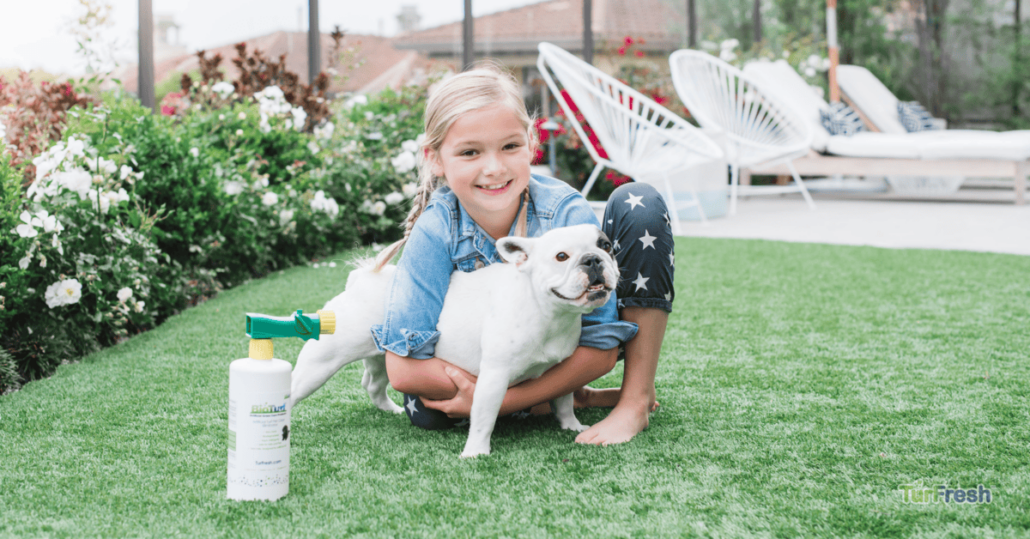
Attach the bottle to your garden hose, saturate the affected area, let it dwell, then rinse. Many turf cleaner directions call for a short dwell time, such as 10 to 15 minutes, before rinsing. Always follow the label instructions for the product you choose.
TurFresh BioS+ (enzymatic turf cleaning spray)
TurFresh BioS+ is described as being formulated to remove pet urine odor and stains by breaking down ammonia and proteins to eliminate the smell rather than covering it up. It is also described as safe to use around kids and pets.
💡 Tip
If odor keeps coming back in the same place, apply the cleaner to fully saturate that zone, not just the surface blades.
When does professional artifical turf cleaning make sense for pet homes and dog facilities?
Professional cleaning is a strong option when odors persist, turf fibers look matted, or pet hair and infill compaction are making the lawn feel dirty even after rinsing.
Professional synthetic grass maintenance is helpful for:
• Busy households that want consistent results without weekly DIY work
• Multi-dog homes where odor returns quickly
• Dog runs and doggy daycares with frequent waste and foot traffic
• Turf that looks flat, holds smells, or drains poorly
What TurFresh does during professional turf maintenance
TurFresh describes a 10-point cleaning process that includes steps like reblooming turf fibers, removing pet hair, de-compacting infill, and addressing pet waste odors, along with detail work such as tucking loose seams. TurFresh also states the techniques and products used are safe for kids and pets, and pets can return to the area after service.
Call to action
If you want the easiest path to a cleaner, fresher synthetic lawn, TurFresh offers professional turf cleaning and pet-focused turf cleaning products. To schedule a professional synthetic grass cleaning, call 📞855-444-8873 or contact TurFresh online 🌐.
💡 Tip
If your lawn smells fine right after cleaning but odors return quickly, the issue is often below the surface. That is where professional de-compaction and deeper odor treatment can help.
How do you take care of artificial grass with pets long term?
Stick to a repeatable routine and treat odor early so it does not settle into the turf system.
Simple maintenance checklist
✅ Daily: pick up solid waste, rinse the spot
✅ Weekly: rinse the turf, focus on pet zones
✅ As needed: enzyme spray for recurring odor, deeper cleaning for heavy-use areas
💡 Tip
If you have multiple pets, treat the main pet area like a “high-traffic zone” and clean it more often than the rest of the lawn.
Frequently Asked Questions
Can you pressure wash artificial turf to remove pet waste?
• A standard garden hose rinse is usually enough for routine pet cleanup, and some turf care guides caution that high-pressure spray can disturb infill. If you use a pressure washer, use a gentle setting and keep the nozzle at a safe distance to avoid displacing infill or damaging seams.
Why does artificial turf smell worse on hot days even if it looks clean?
• Heat can make existing odors more noticeable, especially in frequently used pet areas, so rinsing and odor treatment should focus on the main bathroom zone rather than only the visible mess.
Is baking soda safe to use on pet turf for odor?
• Some turf care resources suggest baking soda as a light deodorizing option, followed by a rinse, but enzyme products are typically recommended when odor is persistent.
How do you know if odors are trapped in the infill?
• If the turf smells fine right after rinsing but odors return fast, or if the surface looks clean yet still smells, odor sources may be sitting deeper in infill or below the blades.
What makes a turf cleaner “pet friendly”?
• A pet-friendly turf cleaner is one that is intended for use around pets and avoids harsh chemicals, while still breaking down odor sources instead of masking them.
Ready for an Odor-Free Yard?
📞 Call (855) 444-8873 or 📱 text (714) 709-2551 to get started.
Professional Artificial Grass Cleaning
Turf Cleaning Products | Deep Clean Your Turf and Infill
Give your family and pets the clean, fresh outdoor space they deserve.
👉 New customers receive 10% OFF
Share
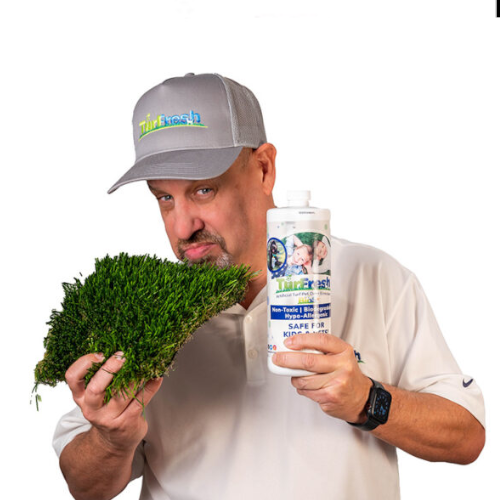

John Pla is the owner of TurFresh and an expert with over 20 years of experience in artificial turf cleaning and maintenance. John’s passion for sustainability, community impact, and innovative solutions has made him a trusted figure in the artificial grass industry and beyond.