
Quick Answer: Turf cleaning for dog parks requires daily waste removal, weekly enzyme treatment of urine zones, and scheduled professional deep cleaning based on daily dog traffic volume. According to the CDC, dog feces can contain E. coli, Salmonella, and roundworm eggs that remain active on surfaces for days to months. In shared dog spaces like parks, HOA amenities, and multifamily communities, surface hygiene is a direct liability issue, not just a maintenance preference.
Professional turf cleaning that works around your schedule and dog volume.
TurFresh commercial service covers dog parks, HOA pet areas, multifamily communities, and municipal facilities. Monthly, quarterly, or custom contracts available.
Get a Commercial Cleaning Quote
✔ Commercial Service✔ Pet Safe✔ 150,000+ Services✔ 30-Day Guarantee
Key Takeaways
🔑 Dog park turf cleaning is a liability issue, not just a maintenance preference. According to the CDC, dog feces can contain pathogens that remain active on surfaces for days to months without treatment
🔑 Daily waste removal alone is not enough. Bacteria and urine compounds accumulate in the infill layer where surface rinsing does not reach. Professional deep cleaning addresses the infill
🔑 Cleaning frequency should be set by daily dog volume, not a fixed calendar. A municipal park with 100 dogs per day needs monthly professional service. A small HOA amenity with 10 dogs per day can operate on a quarterly schedule
🔑 Multifamily communities face a unique challenge: the dog park is a selling amenity. A visibly dirty or odorous pet area directly affects lease renewals and new resident inquiries
🔑 Pet-safe turf cleaning means enzymatic formulas, not fragrance masking. Fragrance sprays cover odor temporarily. Enzyme-based products break down the ammonia and protein compounds that cause it
What Makes Pet-Friendly Parks Hard to Maintain in the First Place?
Pet-friendly parks are challenging to maintain because high activity and pet waste create recurring odor, hygiene, and wear issues concentrated in the same high-traffic zones.
These parks are a favorite space for dogs to run, play, and socialize, and they also build community for pet owners. The challenge is that heavy use concentrates bacterial load in potty zones, entry areas, and fence lines where dogs mark repeatedly. Without a structured cleaning protocol, these zones accumulate bacterial and odor compounds faster than informal cleanup can address.
The critical distinction for facility managers is that visible cleanliness and actual hygiene are different measurements. A park can look clean immediately after waste pickup and still have significant bacterial accumulation in the infill layer that creates odor within hours when the surface heats up.
Why Do Many Pet-Friendly Parks Choose Artificial Grass?
Artificial grass is the preferred surface for dog parks because it handles heavy daily traffic without developing the mud, bare patches, and uneven terrain that natural grass creates within weeks of high-volume use.
For park managers and facility operators, the business case is straightforward: natural grass in a high-use dog area requires constant renovation, creates a muddy appearance that reflects poorly on the facility, and cannot recover during active seasons. Artificial grass stays consistent in appearance and function regardless of how many dogs use it daily.
The three operational reasons facilities choose artificial turf:
✔ Durability: Handles heavy foot traffic and playful paws without developing bald spots or muddy patches that require closure for renovation
✔ Cleanliness: Urine drains through the backing when properly installed, and the surface can be sanitized effectively in a way that soil-based surfaces cannot
✔ Safety: Consistent surface texture reduces trip and injury risk compared to uneven natural grass terrain under heavy use
Complete Guide
📖 Helpful Artificial Turf Maintenance Tips for Doggy Daycares — professional cleaning frequency, enzyme treatment, drainage, and keeping high-traffic turf safe for dogs and staff.
What Maintenance Problems Still Happen With Artificial Turf in Dog Parks?
Artificial turf still requires systematic maintenance because pet waste, bacteria, and concentrated traffic create odor, hygiene risks, and wear even on synthetic surfaces. The advantage over natural grass is not that artificial turf requires no maintenance, but that the maintenance it requires is predictable and schedulable.
The three most common maintenance challenges in artificial turf dog parks:
👍 Odor control: Pet waste leaves ammonia and bacterial compounds that concentrate in the infill layer. Surface rinsing delays but does not eliminate odor buildup without enzyme treatment.
👍 Hygiene: Shared dog spaces accumulate pathogens from multiple animals. A clean-looking surface can still carry bacterial load that creates health risk, particularly in high-traffic communal areas.
👍 Aesthetic appeal: Fiber flattening in traffic lanes and potty zones creates a worn appearance that signals neglect. Grooming and infill leveling restore visual quality and surface safety.
How Do You Keep a Dog Park Clean Without Turning It Into a Daily Struggle?
You keep a dog park clean by pairing simple daily upkeep with a scheduled cleaning protocol that prevents waste and organic material from accumulating to the point where surface treatment is no longer effective.
The key operational insight: it is significantly easier and less expensive to prevent infill contamination than to reverse it. Once bacterial load has saturated the infill layer across a large area, remediation requires more aggressive professional treatment than routine maintenance would have required.
Practical maintenance rhythm for pet-friendly parks:
➡️ Daily: Remove solid waste from all zones. Check and clear common potty areas. Rinse high-use zones with a hose at end of day.
➡️ Weekly: Full surface rinse of all runs and pet areas. Enzyme treatment of potty zones and entry areas with full dwell time. Brush traffic lanes against the grain to restore fiber stand.
➡️ Monthly or quarterly: Professional deep cleaning based on dog volume (see frequency table below). Infill inspection and leveling. Seam and edge inspection.
➡️ As needed: Additional professional service when odors return within days of treatment, drainage slows, or after high-volume events.
Turf Cleaning Frequency by Facility Type
The correct cleaning frequency is determined by daily dog volume and facility type, not a fixed calendar. These are industry-standard guidelines based on typical bacterial accumulation rates under different use conditions.
Municipal Dog Parks
Municipal off-leash areas typically see 50 to 200+ dogs per day across multiple runs. The bacterial load accumulates faster than any other facility type.
➧ Daily: Waste removal and spot rinse
➧ Weekly: Full rinse and enzyme treatment of all zones
➧ Monthly: Professional deep cleaning minimum
➧ Quarterly: Full infill inspection and leveling
HOA and Multifamily Community Dog Parks
HOA amenity dog parks typically see 10 to 50 dogs per day from resident households. Cleaning frequency can be lower than municipal but hygiene standards must meet resident expectations.
➧ Daily: Waste removal (self-service or staff-managed)
➧ Weekly: Rinse of potty zones and enzyme spot treatment
➧ Quarterly: Professional deep cleaning for facilities under 20 dogs/day
➧ Bi-monthly: Professional deep cleaning for facilities over 20 dogs/day
Doggy Daycare and Boarding Facilities
Commercial pet facilities with controlled, tracked dog populations. See the kennel cleaning guide for specific protocols.
➧ Daily: End-of-day full rinse plus solid waste removal after each use
➧ Weekly: Full enzyme treatment of all pet zones
➧ Monthly: Professional deep cleaning for 10+ dogs/day operations
Multifamily Dog Park Cleaning: Why It Matters for Lease Renewals
For multifamily property managers, the dog park is not just a maintenance line item. It is a leasing amenity that directly influences lease renewal decisions and new resident inquiries. According to the American Pet Products Association, over 70 percent of U.S. households own a pet, and pet-friendly amenities are among the top three factors cited by renters with pets when evaluating communities.
A visibly dirty or odorous dog park signals to current and prospective residents that the property does not maintain its amenities. This affects both renewal rates and the ability to market the pet-friendly designation that most multifamily operators now use as a competitive differentiator.
The operational implication: multifamily dog park cleaning should be treated as amenity maintenance, not just grounds maintenance. The standard is the same as a pool or fitness center. Always keep it inspection-ready.
For multifamily property managers, minimum standards include:
✅ Visible waste removal completed daily. Never visible to a resident doing a walkthrough
✅ No persistent odor detectable at the park entry point
✅ Turf fibers standing upright in all zones, with no visible matting in traffic lanes
✅ Professional service documentation available for resident inquiries
What Turf Cleaning Solutions Work Best for Pet-Friendly Parks?
The most effective turf cleaning solutions for dog parks combine three components: enzymatic odor treatment at the infill level, professional mechanical cleaning that decompacts the infill, and a surface rinsing protocol that prevents daily accumulation from reaching the infill.
Pet-safe enzymatic cleaners: TurFresh BioS+ uses beneficial bacteria to break down ammonia and urine protein compounds at the molecular level. Applied with full dwell time, it eliminates odor at the source rather than masking it. Safe for dogs and children immediately after drying.
What does NOT work long-term: Fragrance-based deodorizers mask surface odor temporarily but do not neutralize the underlying compounds in the infill. Repeated use without enzyme treatment allows bacterial load to build to a level that professional cleaning cannot easily reverse.
For HOA and multifamily facilities: A monthly BioS+ treatment of high-use zones combined with quarterly professional deep cleaning is the minimum protocol that maintains effective odor control between service visits.
What Does a Professional Dog Park Turf Cleaning Service Include?
A professional dog park turf cleaning service reaches the infill and backing layer where surface rinsing and DIY enzyme treatment stop. TurFresh's 10-point turf cleaning process covers:
👉 1. Inspection and assessment: Assess turf condition, identify high-odor zones, and document infill depth in traffic areas
👉 2. Debris removal: Remove all surface debris, leaves, and organic matter before wet treatment
👉 3. Pet waste cleanup: Thorough removal of all visible waste from the full surface area
👉 4. Turf sanitization: Application of pet-safe sanitizers with controlled dwell time across all zones
👉 5. Turf deodorization: Enzymatic odor treatment penetrating to the infill level
👉 6. Grooming and brushing: Power grooming of all traffic lanes to restore fiber stand and redistribute infill
👉 7. Stain and spot treatment: Targeted treatment of discolored or high-concentration zones
👉 8. Infill leveling: Redistribution of infill from low-concentration zones to restore even surface support
👉 9. Repairs and rejuvenation: Identification and treatment of damaged seams, edges, or backing issues
👉 10. Final inspection: Full walkthrough with documentation for facility records
How Often Should Dog Parks Schedule Turf Cleaning and Deodorizing?
Dog parks should set cleaning frequency based on daily dog volume, not a fixed default schedule. The right interval is the one that prevents bacterial accumulation from reaching the infill layer between professional visits, not the one that responds to visible problems after they develop.
For most municipal parks, monthly professional cleaning is the minimum. For HOA amenities, quarterly is typically sufficient with consistent daily waste removal and weekly enzyme spot treatment.
TurFresh offers flexible commercial service contracts (monthly, quarterly, bi-annual, or custom) tailored to your facility's dog volume, run size, and climate. Contact us for a custom schedule and quote.
When Should a Park Manager Hire a Turf Cleaning Company?
A park manager should hire a turf cleaning company on a scheduled contract basis, not reactively when problems become visible. By the time odor is noticeable at the park entry or fiber matting is visible in traffic lanes, the infill has accumulated bacterial load that requires significantly more aggressive treatment than prevention would have required.
Signs a professional service visit is overdue:
⚠️ Odor is detectable within hours of the daily rinse cycle
⚠️ Resident or visitor complaints about park odor or hygiene
⚠️ Fiber matting in high-traffic lanes does not respond to brushing
⚠️ Drainage has slowed in potty zones compared to the rest of the surface
⚠️ More than 6 months since the last professional service with daily dog use
How Can TurFresh Help Keep Pet-Friendly Parks Clean and Safe?
TurFresh serves municipal dog parks, HOA pet amenities, multifamily community dog runs, doggy daycares, and commercial boarding facilities with commercial-grade artificial turf cleaning that reaches where staff maintenance stops.
With over 150,000 services completed nationwide, TurFresh offers commercial contracts with flexible scheduling, service documentation for facility records, and pet-safe products that comply with shared-space requirements. Call (855) 444-8873 or use the online contact form to discuss a custom schedule for your facility.
Scheduled cleaning that keeps your dog park lease-ready and complaint-free.
TurFresh commercial service includes documentation for facility records. Monthly, quarterly, or custom contracts. Pet safe the same day.
Schedule a Commercial Service Visit
✔ Commercial Contracts✔ Service Documentation✔ 150,000+ Services✔ 30-Day Guarantee
Frequently Asked Questions
What is a dog park cleaner, and what does it do?
A dog park cleaner is a professional service or product designed to remove pet waste, neutralize bacterial odor compounds, and restore safe hygiene conditions in shared dog spaces. Effective dog park cleaning combines waste removal, enzymatic odor treatment that reaches the infill layer, professional mechanical grooming, and surface sanitization. Fragrance-based products mask odor temporarily but do not neutralize the underlying compounds that cause it.
What is the difference between dog park cleaning and turf cleaning for a dog park?
Dog park cleaning typically refers to basic surface maintenance: waste removal, debris clearing, and visual tidying. Turf cleaning for a dog park includes deeper steps: sanitizing, enzymatic deodorizing that penetrates to the infill layer, power grooming, infill leveling, and professional inspection. Surface cleaning addresses what is visible. Turf cleaning addresses bacterial accumulation that is not visible but creates odor and hygiene risk.
How often should a dog park schedule professional turf cleaning?
Frequency should be based on daily dog volume. Municipal parks with 50+ dogs per day need monthly professional cleaning. HOA amenities with 10 to 20 dogs per day typically operate on a quarterly schedule. Facilities where odors return within days of treatment need more frequent service, which indicates infill contamination beyond what maintenance can address.
Can artificial turf reduce odor problems in pet-friendly parks?
Artificial turf reduces the muddy conditions that trap odor in natural grass but does not eliminate odor without a cleaning protocol. Urine drains through the backing when the drainage system is correctly installed, but bacterial compounds accumulate in the infill layer over time. Odor control requires enzyme treatment that reaches the infill, combined with scheduled professional deep cleaning.
What does pet-safe turf cleaning mean for a dog park?
Pet-safe turf cleaning means using enzymatic sanitizers and deodorizers formulated for synthetic turf that are non-toxic to animals after normal drying. TurFresh products including BioS+ are biodegradable, non-toxic, and safe for dogs and children after the treated area dries. In shared dog spaces, this matters because animals are in direct contact with the surface immediately after a cleaning visit.
Why do dog parks need sanitizing if they already remove waste?
Waste removal eliminates visible material but leaves behind bacteria, urine proteins, and pathogen residue that remain active on the surface and in the infill. According to the CDC, dog feces can contain E. coli, Salmonella, and roundworm eggs that survive on surfaces for days to months. Sanitizing addresses the bacterial load that waste removal leaves behind.
How does turf grooming help dog parks look cleaner?
Grooming lifts flattened fibers in traffic lanes and redistributes infill that has compacted or displaced under heavy use. This restores the consistent appearance that makes a park look well-maintained and reduces the uneven surface that creates trip and injury risk. For multifamily and HOA facilities, fiber stand quality is a visible signal of amenity maintenance standards that residents and prospects notice.
When should a dog park consider repairs and rejuvenation?
Repairs are needed when seams are separating, edges are lifting, backing is visible in high-use zones, or infill has depleted to the point where fibers have no base support. These issues do not resolve with cleaning alone. TurFresh TurFix addresses localized damage and rejuvenation without requiring full turf replacement.
Share
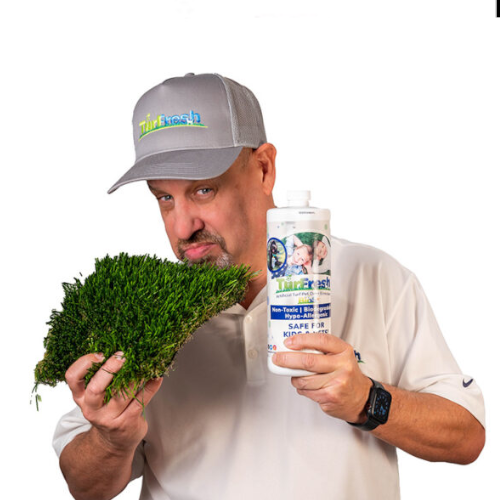

John Pla is the owner of TurFresh and an expert with over 20 years of experience in artificial turf cleaning and maintenance. John’s passion for sustainability, community impact, and innovative solutions has made him a trusted figure in the artificial grass industry and beyond.