
TL;DR
Dog urine smells strongest when it is concentrated, left to sit, or repeated in the same spot, especially in heat. On artificial grass, odor can linger when urine residue settles into the turf backing or base. The best routine is rinse quickly, then use a turf-safe cleaner that breaks down urine residue (not just covers odor). On natural grass, dog urine can cause brown spots because it concentrates nitrogen in one area.
Quick Answer:
Rinse urine spots as soon as possible, then apply a turf-safe enzymatic or oxygen/oxidizing cleaner designed for artificial turf to break down odor-causing residue and help prevent recurring smells.
What makes dog urine smell so strong on turf or grass?
Dog urine smells stronger when it becomes more concentrated, sits long enough to break down, or repeatedly hits the same “hot spot,” especially in warm weather. Concentration can increase when a dog drinks less water or diet changes, and odor becomes more noticeable as urine dries and compounds become more concentrated.
Supporting details
• Repeat spots create layered residue, which is why one corner of the yard can smell much worse than the rest.
• Heat amplifies odor, so summer conditions can make a mild issue feel intense.
• Diet, medications, and hydration can shift urine strength and odor.
💡 Tip: If one area is always the “go-to” spot, treat that zone on a routine schedule instead of waiting for odor to build.
How does dog urine affect artificial turf compared to natural grass?
Dog urine can create odor buildup on artificial turf and brown patches on natural grass when it is left untreated or repeatedly concentrated in the same area. On natural grass, the issue is often nitrogen burn (too much nitrogen in a small spot).
On artificial turf
➡️ Urine can seep through the turf fibers and settle into the backing and base layer. If residue is not rinsed and treated, odors can linger and re-appear, especially in heat. Some sources note that dried urine can leave behind crystals that water alone may not fully remove, which is why bio-enzymatic approaches are often recommended.
On natural grass
➡️ Urine can create dead spots or brown patches because it concentrates nitrogen in one area and can overwhelm the grass.
💡 Tip: Rotating where dogs urinate (when possible) reduces repeat-spot damage and smell.
Which dogs tend to create more intense urine odor or bigger messes?
Bigger dogs usually create more volume, and repeat-spot habits often matter more than breed when it comes to lingering odor. That said, some owners report stronger-smelling urine with certain breeds (for example, Boxers, Bulldogs, and Dalmatians), and very large breeds (such as Saint Bernards, Bull Mastiffs, and Great Danes) can leave larger solid waste that may harden or stick if not removed quickly.
Supporting details
Size and volume increase cleanup demands.
Repeat urination in the same area is one of the biggest drivers of long-term odor on turf.
Diet and hydration can change both urine concentration and stool volume.
💡 Tip: Hydration is one of the simplest levers. More water generally means less concentrated urine, which can reduce odor intensity.
What is the fastest way to control dog urine on artificial grass?
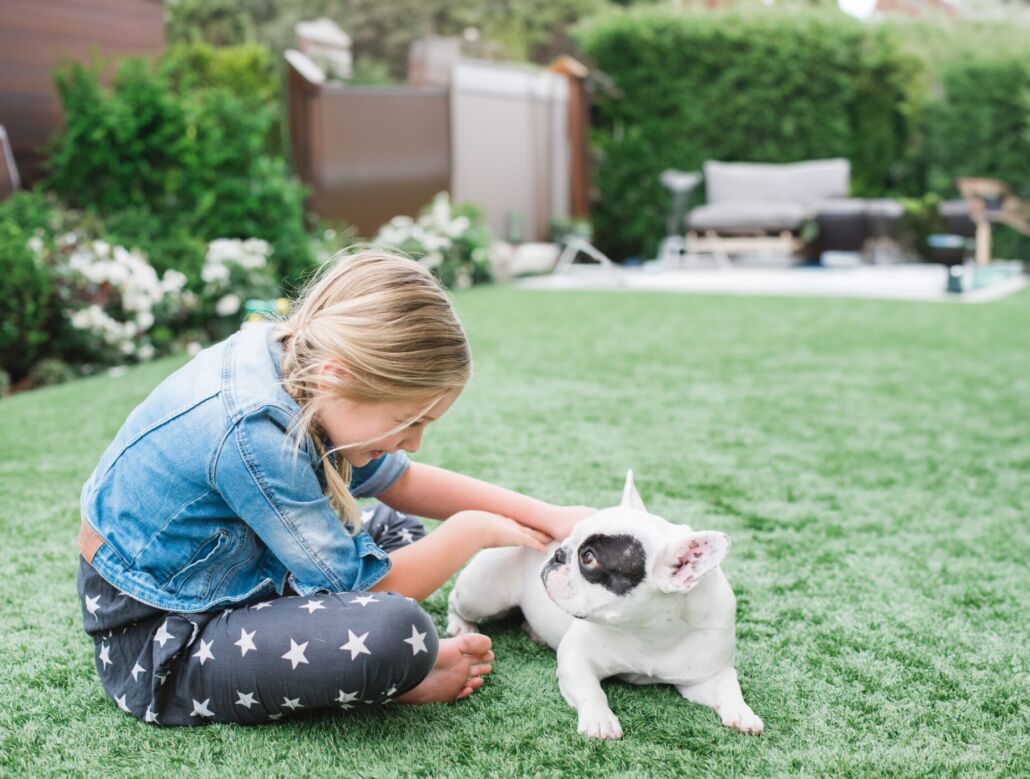
The fastest way to control dog urine on artificial grass is to rinse quickly to dilute residue, then apply a turf-safe cleaner designed to break down odor-causing waste.
Step-by-step routine
👉 Rinse the area with water as soon as you can after urination to dilute residue.
👉 Apply a turf-specific cleaner that targets urine compounds and odor sources.
👉 TurFresh BioS+ uses bacterial enzyme technology to consume and degrade pet waste that causes odor.
👉 TurFresh BioX uses oxidizing technology to break apart ammonia, sulfur, and proteins to eliminate smells rather than covering them up.
👉 Focus on “hot spots” where your dog urinates repeatedly, since that is where odor builds fastest.
👉 Repeat as needed during hot months or in multi-dog yards.
💡 Highlight: Water helps, but odor often returns if residue remains below the surface. Bio-enzymatic approaches are commonly recommended for persistent urine residue on turf.
How do you handle dog poo on artificial grass without stains or odor?
The best way to handle dog poo on artificial grass is to remove it quickly, rinse away residue, and treat the area so bacteria and odor do not build up.
Practical routine
➧ Pick up solids right away to prevent sticking and staining.
➧ Rinse the spot to remove residue trapped between fibers.
➧ Use a turf-safe cleaner on any leftover residue, especially in warm weather or high-traffic areas.
💡 Tip: Keep a small cleanup kit near the back door (bags, a rinse bottle or hose access, and your turf cleaner) so cleanup happens fast.
How should you care for natural grass if a dog regularly urinates and poops on it?
Natural grass stays healthier when you dilute urine with water, remove solid waste quickly, and support the lawn with routine maintenance.
Helpful practices
👍 Water the area regularly to flush urine and reduce nitrogen concentration in specific spots.
👍 Pick up waste quickly so decomposition does not contribute to odor or root issues.
👍 Aeration (coring) and balanced fertilization can support healthier grass and help reduce the visible impact of urine over time.
💡 Tip: If brown spots are a recurring issue, focus on dilution and reducing repeat spots first before increasing fertilizer.
What diet habits can help reduce strong urine odor and large stool volume?
Diet and hydration can influence urine concentration and stool output, so consistent water intake and a balanced diet often help reduce extremes.
Useful habits
✔ Encourage steady water intake to support urine dilution.
✔ Choose a high-quality, consistent diet to support digestion and reduce erratic stool output.
✔ If odor changes suddenly or becomes unusually intense, check with a veterinarian to rule out an underlying issue.
💡 ip: If urine smell changes quickly and dramatically, treat it as a potential health signal first, then address turf cleanup.
Why does professional artificial grass cleaning help in dog-heavy yards?
Professional turf cleaning helps when odor and bacteria build up below the surface and routine rinsing is not enough.
TurFresh professional cleaning focuses on deep-cleaning and restoration to remove micro and macro debris, urine and feces bacteria, and odors. This helps restore appearance and extend turf lifespan, supporting synthetic blades such as polyethylene, polypropylene, and nylon so the turf remains a durable long-term investment.
💡 Practical tips that readers can highlight
✅ Hot spot rule: If one area is hit daily, treat it on a schedule, not only when it smells.
✅ Heat rule: Increase rinsing and treatment frequency during hot months when odor is more noticeable.
✅ Cleanup speed wins: Fast pickup and rinse prevents sticky residue and long-term smell.
✅ Use turf-specific products: Choose cleaners designed to break down urine-related compounds rather than masking odor.
Frequently Asked Questions
Why did my dog’s urine suddenly start smelling much stronger?
• A sudden change in urine odor can happen from dehydration, diet changes, supplements, medications, or a health issue, so it is worth monitoring for other changes and checking with a veterinarian if it persists or comes with 00symptoms.
Why does dog pee sometimes smell like ammonia in the yard?
• Ammonia-like odor can become more noticeable when urine sits and becomes more concentrated, and it often seems worse in heat or when the same spot is used repeatedly.
How often should artificial grass be cleaned if dogs use it daily?
• Daily users typically do best with quick rinses for urine spots plus regular spot treatment of high-use areas, then deeper cleaning on a schedule based on yard size, temperature, and number of dogs.
Will dog pee smell go away on its own outside?
• Outdoor dog pee smell often fades only if residue is diluted and removed; if urine residue remains in a repeat spot, odor commonly returns during warm weather or after moisture.
Can water alone remove dog urine odor from artificial turf?
• Water can dilute fresh urine, but persistent odor may remain if residue settles below the surface, which is why bio-enzymatic approaches are commonly recommended for deeper breakdown.
Do larger dogs always cause more turf odor issues than smaller dogs?
• Larger dogs often create more volume, but repeat-spot habits, heat, and cleanup speed usually have a bigger impact on long-term odor than size alone.
Ready for an Odor-Free Yard?
📞 Call (855) 444-8873 or 📱 text (714) 709-2551 to get started.
Professional Artificial Grass Cleaning
Turf Cleaning Products | Deep Clean Your Turf and Infill
Give your family and pets the clean, fresh outdoor space they deserve.
👉 New customers receive 10% OFF
Share
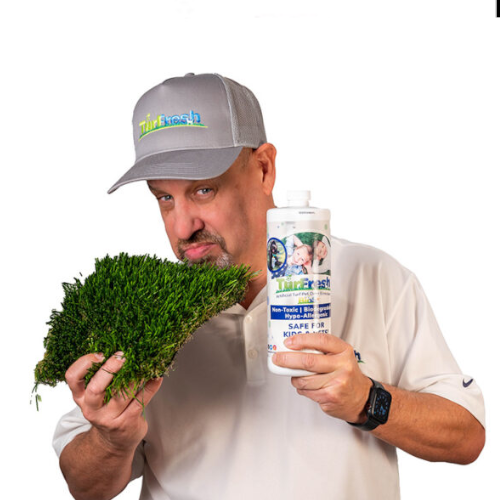

John Pla is the owner of TurFresh and an expert with over 20 years of experience in artificial turf cleaning and maintenance. John’s passion for sustainability, community impact, and innovative solutions has made him a trusted figure in the artificial grass industry and beyond.