
Artificial grass stays green year-round, but it still needs regular artificial turf maintenance to prevent weeds, moss buildup, and flattened blades. With the right approach and the right tools, homeowners can keep synthetic turf clean, upright, and long-lasting without damaging the fibers.
TL;DR: Artificial grass maintenance comes down to four essential steps: removing organic debris, eliminating weeds and moss, lifting flattened turf blades, and maintaining proper infill levels. Using a turf comb designed for synthetic grass helps protect turf fibers while improving appearance, drainage, and lifespan.
- Quick Answer:
The best way to prevent weeds and maintain artificial grass is to regularly remove debris, spot-treat weeds, cross-brush turf fibers with a turf comb, and replenish infill as needed.
Why Does Artificial Grass Still Need Maintenance?
Artificial grass needs maintenance because debris, foot traffic, weather, and environmental factors can cause weeds, moss, and matting over time.
Even though synthetic turf does not grow, organic matter like leaves and dirt can settle between fibers. This creates conditions where moss or weeds can develop, especially along edges and seams. Regular maintenance keeps turf fibers upright, improves drainage, and prevents premature wear.
How Do You Remove Leaves and Debris From Artificial Grass Safely?
You should remove leaves and debris using a synthetic turf rake or turf comb designed specifically for artificial grass.
Organic debris should be cleared at least once a week, or more often in high-foliage areas. Standard metal garden rakes should never be used because their rigid prongs can scratch or tear polyethylene turf fibers.
A turf comb with synthetic bristles allows debris removal without damaging the grass while also loosening compacted areas.
Tip: Always rake lightly and in multiple directions to avoid pushing debris deeper into the turf base.
How Do You Remove Weeds and Moss From Artificial Turf?
Existing weeds and moss should be removed using a water-based weed treatment followed by mechanical removal with a turf comb.
Weeds typically appear around turf edges or areas left unattended. Applying a water-based weed killer helps loosen the roots. A turf comb can then lift weeds from the base without disturbing the turf backing. The same method works for moss, which often forms in shaded or damp areas.
- Regular maintenance prevents small growth from becoming a larger issue.
What Is Turf Brushing and Why Is It Important?
Turf brushing lifts flattened fibers and restores the grass to a natural, upright position.
Over time, foot traffic, furniture, pets, and weather cause artificial grass blades to lean or mat. Cross-brushing, brushing against the grain of the fibers, re-blooms the turf and improves its appearance.
Turf brushing also helps redistribute infill evenly, which supports blade structure and improves drainage.
Recommended frequency:
- Once per month, or more often in high-traffic areas.
- Can You Use a Regular Rake on Artificial Grass?
- No, you should not use a standard metal rake on artificial grass.
- Metal rakes can permanently damage turf fibers by scratching, tearing, or pulling them loose. Artificial grass requires tools designed specifically for synthetic materials, such as turf combs or synthetic-bristle rakes.
- Using the proper tool protects the turf investment and extends its lifespan.
What Is Infill in Artificial Turf and Why Does It Matter?
Infill is a granular material placed between artificial grass fibers to support structure, drainage, and comfort.
Infill helps keep turf blades upright, prevents excessive movement, and creates a more natural feel underfoot. Over time, wind, rain, pets, and foot traffic can reduce infill levels, making periodic top-ups necessary.
When adding infill, a turf comb is used to work the material down to the base of the turf pile, ensuring even distribution.
Benefits of proper infill levels include:
- Improved blade recovery
- Better drainage
- Cooler surface temperatures
- Protection of the turf backing
How Often Should Artificial Grass Infill Be Replenished?
Artificial grass infill should be checked annually and replenished as needed.
High-traffic areas may require more frequent top-ups. A visual sign that infill is low is when turf blades no longer stand upright after brushing.
Professional turf maintenance services can assess infill levels and apply specialized options such as odor-neutralizing or antibacterial infill products.
When Should You Brush Artificial Grass?
Artificial grass should be brushed after heavy use, storms, seasonal changes, or moving furniture.
Any event that compresses turf fibers is a good reason to cross-brush. Brushing after winter weather, heavy rain, or landscaping changes helps restore blade structure and prevent long-term matting.
Is Professional Artificial Turf Maintenance Necessary?
Professional artificial turf maintenance is not required, but it offers convenience and long-term protection.
Homeowners can handle basic upkeep with the right tools, but professional services ensure proper infill depth, deep cleaning, odor control, and artificial turf cleaning products. This is especially helpful for commercial properties or high-use residential lawns.
Frequently Asked Questions
Can weeds grow through artificial grass?
Yes, weeds can grow around edges or through debris buildup, but regular maintenance prevents most issues.
Does artificial turf need to be raked?
Yes, artificial turf should be brushed or combed using synthetic tools, not metal rakes.
What tool is best for brushing artificial grass?
A turf comb or synthetic turf rake is best because it lifts fibers without damaging them.
How do you fix flattened artificial grass?
Flattened turf is fixed by cross-brushing against the grain to lift blades back into a vertical position.
Does artificial grass drain properly?
Yes, when infill levels are maintained and debris is removed, artificial grass drains efficiently.
Practical Maintenance Tips for Artificial Grass
- Remove leaves and organic debris weekly
- Spot-treat weeds early before roots establish
- Brush turf against the grain at least once per month
- Check infill levels annually
- Avoid metal tools and harsh chemicals
Keeping Artificial Grass Looking Its Best
Artificial grass lasts longer and looks better when maintained consistently. Simple steps like brushing, debris removal, weed prevention, and infill management protect your investment and keep your lawn looking clean, upright, and natural.
For homeowners who prefer professional support, artificial turf maintenance services provide thorough cleaning, infill replenishment, and long-term care solutions. Those who want to handle maintenance themselves should always use tools and artificial grass cleaning products designed specifically for synthetic turf.
Share
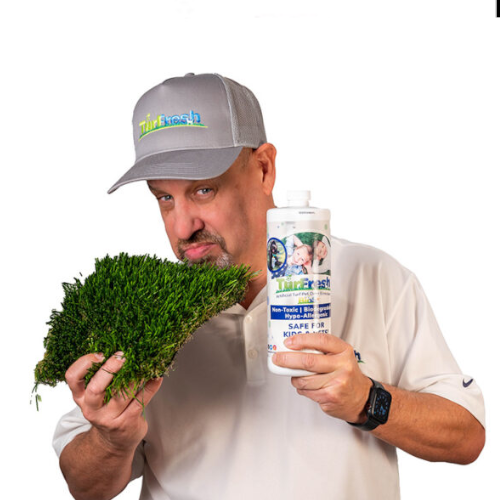

John Pla is the owner of TurFresh and an expert with over 20 years of experience in artificial turf cleaning and maintenance. John’s passion for sustainability, community impact, and innovative solutions has made him a trusted figure in the artificial grass industry and beyond.